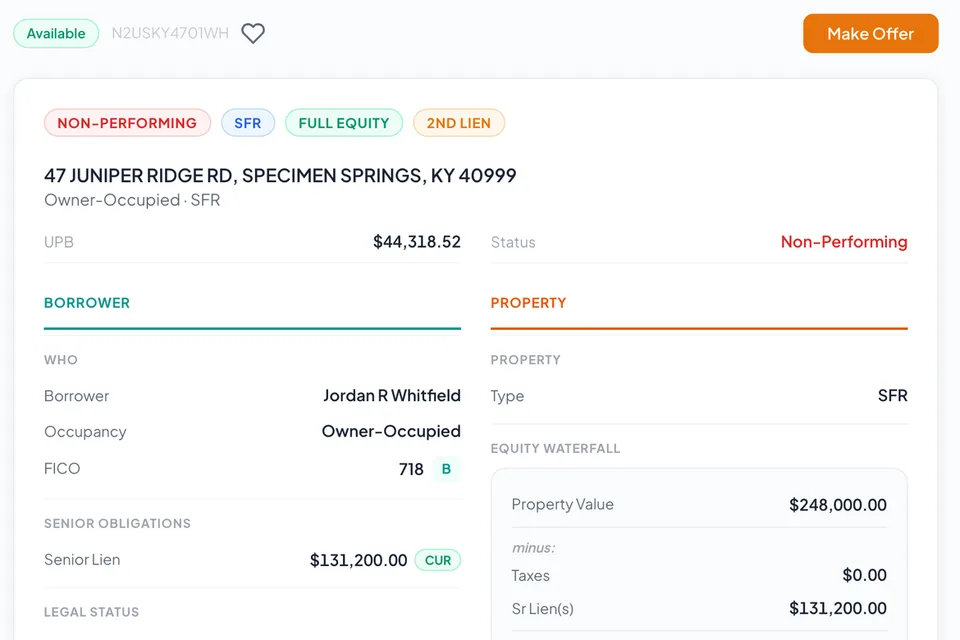
Case Study: 1,731% IRR on a Non-Performing Second Lien Payoff
NPL case study: a $20,239 non-performing second lien purchased for 20 cents on the dollar paid off in 3 months — generating a 1,731% annualized IRR.
The Setup
This case study comes from the archives — a 2015 deal that shows just how profitable non-performing loan investing can be when you buy right and the timing breaks your way. The asset was a junior lien on a condo, a second mortgage where the borrower had stopped making payments. The first position loan was current, and there was full equity coverage protecting the junior position.
What makes this deal especially interesting is the backstory. The note was part of a portfolio being purchased from a bank, and portions of that portfolio were being pre-sold to trusted investors to raise capital for the acquisition. This particular loan was sold to an outside investor on September 29th — but the bank notified the seller that the borrower had already paid off the loan on September 28th, literally the day before the cutoff date. Because the payoff occurred prior to the investor's contractual cutoff, the proceeds belonged to the original buyer, not the pre-sale investor. That timing distinction turned an ordinary pre-sale into a windfall for the portfolio buyer.
The Deal Metrics
| Metric | Value |
|---|---|
| Collateral | Condo |
| Property Value (FMV) | $220,000 |
| First Lien Balance | $152,462 |
| Equity Above Senior | $67,538 |
| Second Lien UPB | $20,239 |
| Equity Coverage Ratio | 3.337x |
| CLTV | 78.52% |
| Purchase Price | $4,048 (20% of UPB) |
The equity math told the full story before any outreach began. With a property value of $220,000 and a senior lien of $152,462, there was $67,538 of equity sitting above the first mortgage. The second lien's unpaid principal balance was just $20,239, which meant the equity coverage ratio was 3.337x — more than three dollars of equity for every dollar owed on the junior lien.
From the borrower's perspective, the combined loan-to-value was 78.52%. A CLTV below 80% signals a borrower with meaningful skin in the game. They owe less than the property is worth across both liens, which makes walking away from the debt an unattractive option. When you see a CLTV this low on a non-performing second, the probability of a payoff or negotiated resolution is high.
The cost basis was $4,048 — just 20 cents on the dollar. In 2015, non-performing second liens behind current firsts with full equity coverage could be acquired at that price point. The pricing reflected the broader market at the time, where institutional sellers were liquidating large volumes of distressed junior debt.
The Resolution
The resolution on this deal was a full payoff — the borrower paid off the second lien in its entirety, including accrued interest. The total payoff amount came in at approximately $21,568, covering the unpaid principal balance plus interest owed on the note.
The payoff came through during the interim servicing period, roughly three months after the portfolio acquisition closed. There was no extended negotiation, no loan modification, and no foreclosure required. The borrower simply paid.
This is the ideal scenario for a junior lien investor: a borrower with equity, motivation, and the means to resolve the debt. The current first mortgage payments proved the borrower had income and wanted to keep the property. The low CLTV confirmed the borrower had a financial incentive to clear the second lien rather than let it compound. And the timing — three months from acquisition to payoff — compressed the return into a fraction of a year.
The Numbers
| Metric | Value |
|---|---|
| Purchase Price | $4,048 |
| Payoff Amount | ~$21,568 |
| Gross Profit | ~$17,520 |
| Hold Time | ~3 months |
| ROI | 432.8% |
| Annualized IRR | 1,731% |
The back-of-the-envelope IRR calculation for a single lump-sum exit:
IRR = (Payoff - Cost Basis) / Cost Basis / (Months to Exit / 12)
($21,568 - $4,048) / $4,048 / (3 / 12) = 1,731%
The raw return on investment was 432.8% — the investor collected more than five times the original purchase price. But because the payoff arrived in just three months, the annualized internal rate of return balloons to 1,731%. That number is not typical, but it illustrates a fundamental principle in note investing: speed of resolution is the single greatest multiplier of IRR.
The Takeaway
This deal worked because three factors aligned. First, the equity position was overwhelming — a 3.337x coverage ratio meant the investor's position was secure from day one. Second, the borrower was motivated, evidenced by the current first mortgage payments and a CLTV well below 80%. Third, the purchase price was right. Buying at 20 cents on the dollar created a cost basis so low that almost any resolution — payoff, modification, or even a deeply discounted settlement — would have produced a strong return.
The pricing environment has changed since 2015. Non-performing seconds with full equity behind a current first no longer trade at 20 cents on the dollar in most cases. But the underlying strategy has not changed. Investors who build relationships with motivated sellers, who can evaluate equity coverage and CLTV quickly, and who understand contractual cutoff dates and pre-sale mechanics are still finding deals with outsized return potential. The numbers on any individual deal may look different, but the process — source, diligence, acquire, resolve — remains the same.
 Free Note Investor Workshop
Learn notes by pricing one.
Analyze a training loan modeled on a real deal, then submit practice offers on loans that actually sold.
- No credit card
- No email needed to start
- 7 steps · about 70 min