Judicial vs. Non-Judicial Foreclosure for Note Investors
Judicial vs. non-judicial foreclosure: court case vs. power of sale, 2026 state timelines, redemption and deficiency rules, and how each moves your bid.
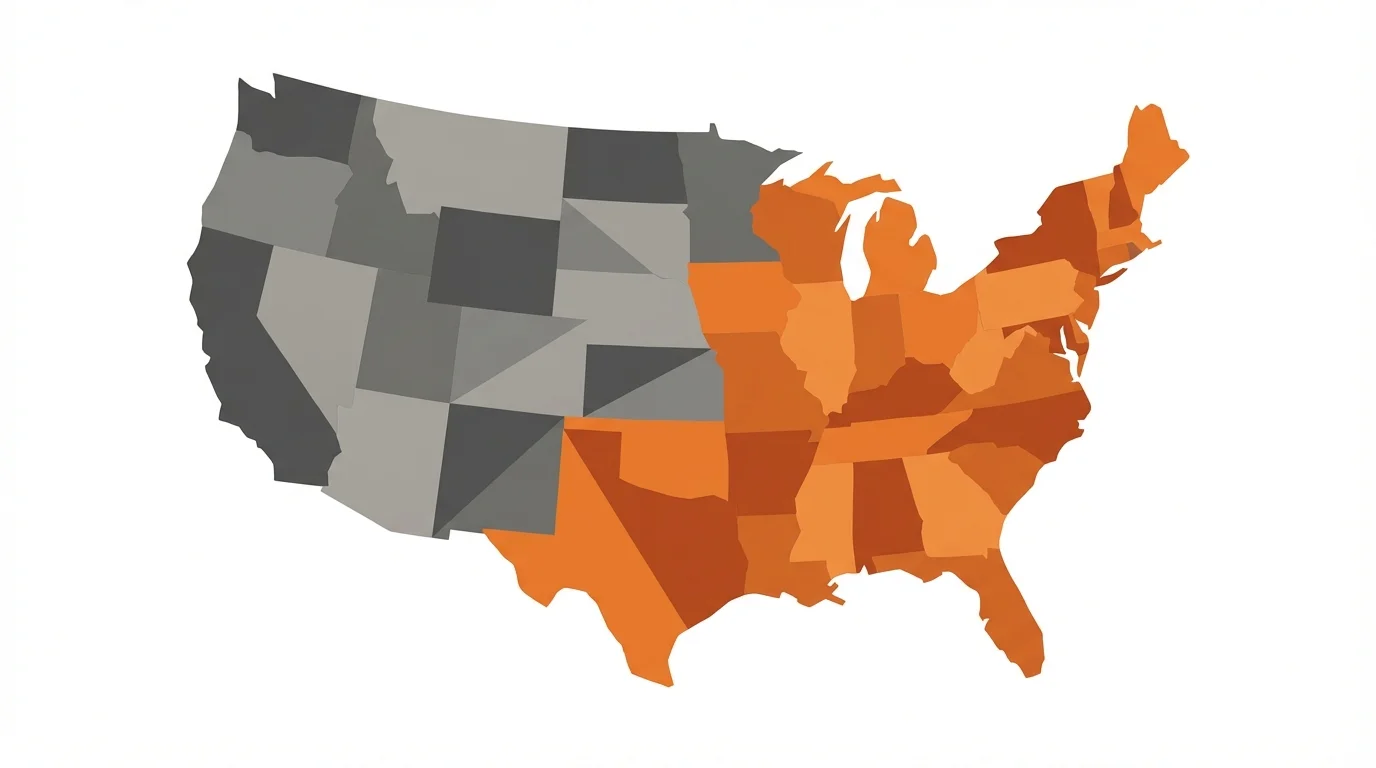
Judicial foreclosure runs through a lawsuit: the lender files in court, and a judge orders the sale. Non-judicial foreclosure skips the courtroom: a trustee or the lender sells the property under a power-of-sale clause in the deed of trust or mortgage, following the state's statutory notice steps. The difference shows up on the clock: in ATTOM's mid-year 2026 foreclosure report, all five states with the shortest average foreclosure timelines in Q2 2026, led by Texas at 155 days, are non-judicial in FIXnotes' state data, while four of the five longest, led by Louisiana at 3,491 days, are judicial.
For a note investor that is not trivia. The framework in the state where the collateral sits sets your worst-case timeline, your carrying costs, and therefore the most you should pay for the loan. This post covers the strategy layer: what differs, what it costs, and how to price it. For the step-by-step process from first notice to deed, read the foreclosure process: a note investor's playbook.
What Is the Difference Between Judicial and Non-Judicial Foreclosure?
The core difference is who authorizes the sale. A judicial foreclosure is a court case: the lender sues, the borrower is served and can answer, and the sale happens under a court judgment. Florida's statute is one line long on the point: "All mortgages shall be foreclosed in equity" (Fla. Stat. §702.01).
A non-judicial foreclosure happens without a court order first, and it is available only when the parties contracted for a power-of-sale clause in the mortgage or deed of trust (Cornell LII, non-judicial foreclosure). The statute then supplies the steps. Washington is a clean example: the deed of trust must contain a power of sale, a written notice of default must go out at least 30 days before the notice of sale (RCW 61.24.030), and the trustee must record and send the notice of sale at least 90 days before the sale, or 120 days when the state's pre-foreclosure letter is required (RCW 61.24.040).
| Judicial foreclosure | Non-judicial foreclosure | |
|---|---|---|
| What authorizes the sale | A court judgment | A power-of-sale clause plus the state statute |
| Who runs it | The court, through your attorney | A trustee (deed of trust) or the lender (mortgage with a power of sale) |
| Typical first public filing | A complaint, often with a lis pendens recorded | A notice of default or notice of sale, per the statute |
| The sale | Sheriff's or court-ordered sale; some states require the court to confirm it | Trustee's sale |
| How the borrower fights it | Answers the complaint and raises defenses in the case | Has to go to court to stop the sale |
| Deficiency and redemption | Varies by state | Varies by state |
The borrower-defense row matters more than it looks. In a judicial case, the defense is part of your lawsuit and moves on the court's calendar. In a non-judicial state the borrower has to start the litigation. In Washington, a borrower can ask a court to restrain a trustee's sale, and the court must require the borrower to pay the regular monthly sums into court as a condition of the order (RCW 61.24.130).
Mortgage vs. Deed of Trust: Does the Instrument Decide?
Mostly, but not entirely. A deed of trust names a trustee who holds the power to sell, which is why deed-of-trust states tend to foreclose non-judicially. A mortgage without a power of sale has to go through court. But a mortgage can carry a power of sale too. Massachusetts writes a "Statutory Power of Sale" into its code that any mortgage can incorporate by reference (M.G.L. c.183 §21), and FIXnotes' state data lists Massachusetts as a non-judicial state that uses mortgages.
The practical rule: read the security instrument in the collateral file for a power-of-sale clause, then read the statute in the property's state. The label on the document is a starting point, not the answer.
Which States Are Judicial and Which Are Non-Judicial?
Every state's foreclosure framework, typical timeline, redemption notes and cited legal flags are on its page in FIXnotes' state market hub. The table below covers the ten states at either end of ATTOM's Q2 2026 timeline ranking, with the primary process from our state data:
| State | Avg. days in foreclosure, Q2 2026 (ATTOM) | Primary process (FIXnotes state data) |
|---|---|---|
| Louisiana | 3,491 | Judicial |
| Hawaii | 2,293 | Judicial |
| New York | 2,007 | Judicial |
| Connecticut | 1,626 | Judicial |
| Nevada | 1,507 | Non-Judicial |
| Alaska | 199 | Non-Judicial |
| West Virginia | 196 | Non-Judicial |
| Wyoming | 173 | Non-Judicial |
| New Hampshire | 157 | Non-Judicial |
| Texas | 155 | Non-Judicial |
Nationally, properties foreclosed in Q2 2026 had been in the process for an average of 563 days, the lowest level since 2013 and down 13 percent from a year earlier (ATTOM).
Read those numbers as what happened to the loans that finished foreclosure that quarter, not as a statutory minimum. Nevada sits on the long list even though it is non-judicial in our data, which tells you the framework sets a floor, not a forecast. A loan that has bounced through bankruptcy filings, loss-mitigation reviews and servicing transfers can take years anywhere.
"Primary process" is a simplification in some states. Hawaii, for example, also has a power-of-sale procedure, but a residential owner-occupant can convert a non-judicial foreclosure into a judicial one (HRS §667-53).
When Does the Foreclosure Clock Actually Start?
Later than most new investors model, in both systems. When the loan is secured by the borrower's principal residence, Regulation X bars the servicer from making the first notice or filing for any judicial or non-judicial foreclosure until the borrower is more than 120 days delinquent, with narrow exceptions such as a due-on-sale violation (12 CFR §1024.41(f); the principal-residence scope is in §1024.30(c)(2)). On a fresh default on an owner-occupied loan, that is four months before the state's process even begins.
Then a bankruptcy filing can stop everything. The petition operates as an automatic stay of any act to enforce a lien against property of the estate (11 U.S.C. §362(a)), and a Chapter 13 plan can run as long as five years (11 U.S.C. §1322(d)). A judicial case gives the borrower more months in which to file; our guide to borrower bankruptcy for note investors covers the relief-from-stay motion and what to do next.
How Does Foreclosure Type Change Your Bid?
The framework is a time variable, and time is the most expensive input in an NPL. Every extra month carries attorney time, property taxes, insurance, servicing fees and preservation costs, and it pushes your recovery further out.
A simple way to see it is to work backward from the recovery. Take the net recovery you expect after all costs, divide by one plus your target annual return times the years to resolution, and that is your maximum bid at that return. The figures below are hypothetical and use simple, not compounded, return:
| Hypothetical inputs | Non-judicial state | Judicial state |
|---|---|---|
| Net recovery after all costs | $62,000 | $56,000 |
| Worst-case years to resolution | 0.75 | 2.0 |
| Target annual return | 15% | 15% |
| Maximum bid (recovery ÷ (1 + return × years)) | about $55,700 | about $43,100 |
Same target return, a $6,000 gap in net recovery, and about a $12,600 gap in what you can pay, driven by the clock and the extra costs it brings. That gap is the price of time, not a mispricing. For the full pricing method, including how to weigh a workout against a foreclosure exit, see how to value NPLs to make an offer.
Two habits keep this honest:
- Price to the worst case. Assume the loan goes the full distance in its state, including any redemption period. A modification, discounted payoff or deed in lieu that closes sooner is upside against a model that already works.
- Treat a hybrid or contested path as judicial. If the state allows both procedures, or the borrower can force the case into court, underwrite to the slower path.
Redemption and Deficiency: The Rules After the Sale
Two rules decide what the sale is worth to you, and both vary by state, so look them up for the specific property rather than assuming them from the framework.
Redemption is the borrower's right to buy the property back after the sale. A non-judicial state can still have one: in Minnesota the owner generally has six months after a foreclosure-by-advertisement sale to redeem, with twelve-month exceptions in specific cases (Minn. Stat. §580.23). Washington allows no redemption at all after a trustee's sale (RCW 61.24.050). In Iowa, a judicial state in our data, the default rule lets the debtor redeem within one year of the sale and stay in possession in the meantime (Iowa Code §628.3). During a redemption period you cannot treat the property as yours to renovate or resell, so add the period to your worst-case timeline.
Deficiency is the shortfall when the sale brings less than the debt. Some non-judicial states take it off the table: California bars a deficiency after a sale under a power of sale (Cal. Code Civ. Proc. §580d), and Washington bars one after a trustee's sale except as permitted for commercial loans (RCW 61.24.100). Either way, price the collateral, not the judgment: a deficiency is only worth what you can collect from a borrower who already stopped paying. Where a state limits deficiencies, the anti-deficiency flag on its market page cites the statute.
Judicial or Non-Judicial: Which Should You Buy?
Neither framework is better; they are different prices for different timelines.
Non-judicial states recycle capital faster and carry fewer months of cost, and the statutory path is more predictable. Priced to the clock, that speed means a higher bid, which leaves less room for an underwriting miss.
Judicial states should price at deeper discounts for the longer worst case. The longer runway also gives you more time to work the borrower toward a modification, payoff or deed in lieu before a sale date, and a local investor who knows the courts and attorneys has an edge there. The cost is capital tied up longer, more legal spend, and more months for a bankruptcy filing to land.
A portfolio can hold both. Non-judicial assets supply near-term resolutions; judicial assets, bought cheaper, can carry yield over a longer horizon. How you weight them depends on how much capital you can leave tied up and how much active management you can run, which our post on allocating a note portfolio works through. Spread across several states within each group, too, so one state's backlog or law change cannot stall the whole book. For the wider foreclosure picture, including what happens at the sale and after, see foreclosure: a complete guide for note investors.
Running a Foreclosure Either Way
The paperwork differs, but the investor's job is the same.
Brief your attorney on the goal. Tell the foreclosure attorney up front that a workout is the preferred outcome and the foreclosure is leverage, and ask whether they will handle the demand letter or first notice as a standalone engagement before you commit to the full case. A letter on law-firm letterhead signals a different level of urgency than another servicer letter.
Keep the servicer and attorney talking. Your servicer handles borrower communication and payments; your attorney handles the legal track. Loss-mitigation offers and legal deadlines have to line up, so put the two in direct contact from day one.
Know the documents. A judicial case usually starts with a complaint and a recorded lis pendens, runs to a judgment, and ends in a sheriff sale and deed. A non-judicial case runs on the statutory notices to a trustee's sale and a trustee's deed. At either sale you will usually credit-bid up to your debt; if a third party outbids you, you are paid from the proceeds, and if not, the property becomes your REO.
Before you bid on any loan, or the week a file goes to an attorney, run this checklist:
- Framework: judicial, non-judicial, or both? If both, underwrite the slower path.
- Instrument: does the mortgage or deed of trust contain a power-of-sale clause?
- Clock: months to the earliest possible first filing (the 120-day rule, if the property is the borrower's principal residence), plus the state's statutory steps, plus a bankruptcy allowance.
- After the sale: redemption period length and who keeps possession; whether a deficiency is even available.
- Costs: attorney, court or trustee fees, taxes, insurance, preservation and servicing, multiplied by your worst-case months.
- Bid: net recovery divided by (1 + target return × years). If the seller wants more, pass.
- Tracker: once filed, log the current stage, next action and owner, next hard deadline, costs to date, estimated costs to finish, redemption expiry, and bankruptcy status, and review it on a schedule.
Frequently asked questions
- What is the main difference between judicial and non-judicial foreclosure?
- Who authorizes the sale. In a judicial foreclosure the lender files a lawsuit and the court orders the sale; Florida, for example, requires that all mortgages be foreclosed in equity (Fla. Stat. §702.01). In a non-judicial foreclosure a trustee or the lender sells under a power-of-sale clause in the deed of trust or mortgage, following the state's statutory notice steps, without a court order.
- Is non-judicial foreclosure always faster?
- Usually, but not always. In ATTOM's Q2 2026 data, the five states with the shortest average foreclosure timelines were all non-judicial in FIXnotes' state data, led by Texas at 155 days. Nevada, also non-judicial in our data, was among the five longest at 1,507 days. The framework sets the floor; the loan's own history decides where it lands.
- Can a lender get a deficiency judgment after a non-judicial foreclosure?
- It depends on the state. California bars a deficiency on a note secured by a deed of trust or mortgage after a sale under a power of sale (Cal. Code Civ. Proc. §580d), and Washington bars one after a trustee's sale except as permitted for commercial loans (RCW 61.24.100). Other states treat deficiencies differently, so check the statute before you count on one.
- Does a non-judicial foreclosure mean there is no redemption period?
- No. Minnesota is a foreclosure-by-advertisement state, and its statute still gives the owner six months after the sale to redeem in the standard case (Minn. Stat. §580.23). Washington, by contrast, allows no redemption after a trustee's sale (RCW 61.24.050). Add any redemption period to your worst-case timeline.
 Free Note Investor Workshop
Learn notes by pricing one.
Analyze a training loan modeled on a real deal, then submit practice offers on loans that actually sold.
- No credit card
- No email needed to start
- 7 steps · about 70 min