
The Default Timeline: How Payment Status Shapes Note Investor Strategy
Default timeline explained for note investors — how payment status from 30-day late through charge-off shapes pricing, strategy, and opportunity.
Why Does the Default Timeline Matter to Note Investors?
Every non-performing loan you evaluate has a story, and the most important chapter of that story is written in the payment status field on the data tape. A loan that went delinquent three months ago is a fundamentally different asset than one where the last payment was received four years ago. The borrower's psychology is different. The bank's internal treatment of the loan is different. The property condition is likely different. And the price you should pay -- along with the resolution strategy you deploy -- must reflect those differences.
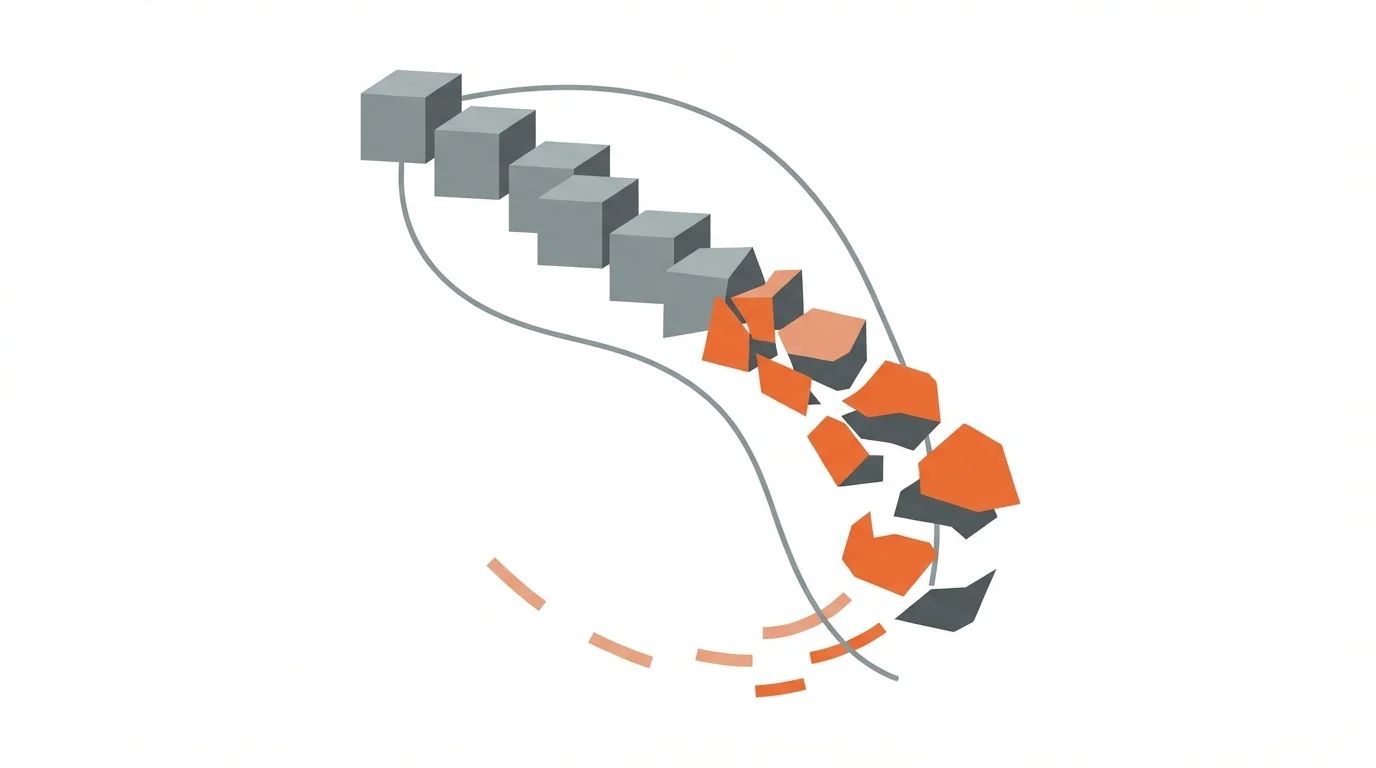
Most educational content about non-performing notes treats default as a binary: the borrower is either paying or not paying. That framing is useful for introductory material, but it obscures the nuance that drives real-world pricing and strategy. Default is not an event. It is a progression -- a timeline that moves through distinct stages, each of which creates a different risk profile and a different opportunity set for the note investor.
This article walks through the full default timeline from the borrower's first missed payment through charge-off, explaining what happens at each stage inside the originating lender's operation and how that translates into actionable intelligence for investors buying on the secondary market.
What Happens When a Borrower Misses the First Payment?
The default timeline begins the day a borrower fails to make a scheduled payment by the due date. Most promissory notes and mortgage agreements include a grace period -- typically 15 days -- before a late fee is assessed. During the grace period, the loan is technically past due but is not yet reported as delinquent to the credit bureaus.
If the payment arrives within the grace period, nothing changes from the lender's perspective. No delinquency is recorded, no adverse reporting occurs, and the loan remains classified as current. This is a non-event for note investors because these loans never appear on a non-performing loan tape.
Once the grace period expires without payment, the loan transitions to 30-day delinquent status. The servicer reports the late payment to the credit bureaus, and late fees begin accruing. For the borrower, this is the first concrete consequence -- a hit to their credit score that will persist for years. For the bank, it is the first trigger in an escalating series of internal protocols.
How Do Banks Handle Early-Stage Delinquency?
Understanding how banks and institutional servicers manage delinquent loans internally is critical for note investors, because those internal processes determine when and at what price loans become available for sale.
30-Day Delinquent
At the 30-day mark, the servicer's automated systems generate the first collection notices. Outbound calls begin. The borrower receives letters and voicemails encouraging them to bring the payment current. At this stage, the bank's posture is conciliatory -- the assumption is that the borrower experienced a temporary disruption and will self-correct.
From the bank's balance sheet perspective, a 30-day delinquent loan is still classified as a performing asset. The bank has not yet increased its loss reserves for this loan. Internal reporting flags it for monitoring, but no escalation occurs. You will almost never see a 30-day delinquent loan offered for sale on the secondary market. The bank expects the borrower to cure, and statistically, they are right -- the majority of loans that reach 30-day status return to current within the next payment cycle.
60-Day Delinquent
When a second consecutive payment is missed, the loan crosses into 60-day delinquent territory. The bank's internal response intensifies. Loss mitigation teams are formally engaged. The borrower receives more aggressive outreach -- certified letters, increased call frequency, and often the first mention of workout options like forbearance or loan modification.
At 60 days, the bank begins reserving against the loan. Accounting standards require lenders to set aside capital proportional to the probability of loss once a loan shows sustained delinquency. This reserve requirement is not a small number -- it directly reduces the bank's available capital and weighs on its regulatory ratios.
For note investors, 60-day delinquent loans are still uncommon on trade tapes. Some specialty sellers and smaller banks do offer them, typically at 50% to 80% of unpaid principal balance depending on collateral quality. The pricing reflects the fact that many 60-day loans still cure without intervention. Buying at this stage is a bet on early engagement -- if you can reach the borrower and offer a viable workout before the delinquency deepens, you may convert the asset to performing status quickly. The risk is paying a higher basis for a loan that continues to deteriorate.
90-Day Delinquent -- The Institutional Threshold
The 90-day mark is the line that transforms a delinquent loan into a non-performing loan in the eyes of regulators, accountants, and the secondary market. Three consecutive missed payments trigger a cascade of consequences inside the bank:
- Regulatory classification changes. Bank examiners flag the loan as substandard or doubtful, increasing scrutiny on the bank's loan portfolio quality.
- Full loss provisioning. The bank must reserve a significant percentage of the loan balance against potential loss, reducing its Tier 1 capital.
- Revenue recognition stops. Under accrual accounting, the bank had been booking interest income on the loan even though it was not collecting payments. At 90 days, the bank must reverse that accrued income and stop recognizing future interest until payments resume. This is a direct hit to the bank's reported earnings.
- Internal escalation. The loan moves from routine collections to the special assets or workout department -- a team of specialists whose sole job is resolving problem loans.
This is why 90 days is the most important threshold for note investors to understand. It is the point where the bank's economic incentive to hold the loan flips. Before 90 days, holding the loan costs the bank relatively little. After 90 days, every month the loan remains on the books consumes capital, generates regulatory friction, and produces no income. The pressure to sell intensifies with each passing month.
What Is a Charge-Off and Why Does It Create Opportunity?
If the borrower remains delinquent past 90 days, the bank's next major milestone is the charge-off. For most residential mortgage lenders, charge-off occurs at approximately 120 to 180 days of delinquency, though the exact timing varies by institution and loan type.
A charge-off does not mean the debt is forgiven or the lien is released. It is an accounting event: the bank writes the loan down to its estimated recoverable value (often zero for unsecured portions) and removes it from its performing loan portfolio. The borrower still owes the money. The lien still encumbers the property. But the bank has officially recognized the loss on its books.
For note investors, charge-off status is significant for three reasons:
-
Maximum seller motivation. A charged-off loan is a resolved loss on the bank's income statement. The bank has already absorbed the financial pain. Any recovery from selling the loan is upside -- incremental revenue against a loss that has already been booked. This makes the bank a willing seller at steep discounts.
-
Deep discounts. Charged-off first-lien residential mortgages typically trade between 20% and 50% of UPB, with second liens trading even lower. The exact price depends on collateral value, property condition, occupancy status, and the depth of the delinquency.
-
Longer resolution runway. A loan that has been in default for a year or more presents a different borrower profile than a freshly delinquent loan. The borrower has had extensive time to disengage, the property may have deteriorated, and prior loss mitigation attempts have likely failed. Your resolution strategy must account for this reality.
How Does Default Depth Affect Pricing?
The relationship between default depth and pricing is not linear -- it is a step function with distinct inflection points. Here is how pricing typically shifts as a loan moves through the default timeline:
| Default Stage | Months Delinquent | Typical Pricing (1st Lien, % of UPB) | Typical Pricing (2nd Lien, % of UPB) | Key Pricing Driver |
|---|---|---|---|---|
| 30-day late | 1 | 60--90% | 40--70% | High cure probability |
| 60-day late | 2 | 50--80% | 30--60% | Declining cure probability |
| 90-day late | 3 | 40--70% | 20--50% | NPL classification; bank motivation increases |
| 6 months | 6 | 35--60% | 15--40% | Prior loss mitigation likely failed |
| 12+ months | 12+ | 25--50% | 10--30% | Deep default; borrower fully disengaged |
| Charge-off | 4--6+ | 20--50% | 5--25% | Bank has booked the loss; selling for recovery |
| Active foreclosure | Varies | 20--45% | 10--25% | Legal costs partially incurred; timeline uncertainty |
These ranges are approximate and shift based on lien position, geography, property value, and market conditions. The critical pattern is clear: deeper delinquency means lower acquisition cost, but it also means more work, more risk, and a longer timeline to resolution.
How Does the Timing of Your Purchase Affect Strategy?
The stage at which you acquire a defaulted loan directly shapes your available resolution paths and the probability of success for each one. Buying early in the default timeline is a fundamentally different business than buying deep non-performers.
Buying Early-Stage Delinquency (30--90 Days)
If you acquire a loan that is only one to three months delinquent, the borrower is likely still reachable, still emotionally attached to the property, and possibly still capable of making payments. The default may have been caused by a temporary hardship -- job loss, medical event, divorce -- that is resolvable.
Your primary strategy at this stage is borrower engagement and early intervention. A well-timed hello letter followed by servicer outreach can open a conversation that leads to a reinstatement (the borrower brings the loan current) or a forbearance agreement that prevents the loan from deteriorating further. The cost of resolution is low because you are intervening before the borrower has fully disengaged.
The tradeoff is price. Early-stage delinquent loans command higher prices because the cure probability is higher. Your margin of safety is thinner, and if the borrower does not respond, you have paid a premium for a loan that is now sliding deeper into default.
Buying Mid-Stage Default (3--12 Months)
This is where the majority of the secondary market's non-performing loan inventory lives. Loans in this range have been through the bank's initial loss mitigation cycle and failed to cure. The borrower is likely aware of their options -- modification, discounted payoff, deed in lieu -- and has either been unresponsive or unable to perform.
Your strategy at this stage is active resolution work. You are not the first entity to reach out to this borrower, but you may be the first one willing to offer terms that actually work for their situation. Banks are constrained by regulatory guidelines and internal policies that limit their flexibility. As a private note investor, you can structure modifications, accept discounted payoffs, or negotiate creative solutions that the originating lender could not or would not offer.
Pricing in this range gives you a meaningful spread between acquisition cost and recoverable value. The work is real -- expect to invest time and money in due diligence, servicer coordination, and borrower outreach -- but the economics are favorable for investors who have built efficient resolution processes.
Buying Deep Default (12+ Months or Charge-Off)
Deep default loans offer the steepest discounts and the greatest potential returns, but they also carry the most risk and require the most sophisticated evaluation.
At this stage, the borrower has been non-paying for a year or more. They may have abandoned the property. They may be judgment-proof. The property may have sustained damage from deferred maintenance or vacancy. Prior servicers may have lost contact entirely. And depending on the state, the statute of limitations for enforcing the note or pursuing foreclosure may be approaching or, in some cases, may have already expired.
Your strategy for deep default loans leans heavily on collateral value and legal enforceability. The borrower's willingness to engage is a bonus, not an expectation. Your underwriting must survive the worst-case scenario: foreclosure in the applicable state, with all associated costs and timelines. If the numbers work at foreclosure, every other resolution path is upside.
The due diligence burden is significantly higher on deep default loans. You need to verify:
- Statute of limitations status -- Has the note or mortgage been accelerated? When? Does the applicable state's statute of limitations bar enforcement?
- Property condition -- Is the property occupied or vacant? Has it been maintained? Drive-by inspections, aerial imagery, and BPOs are essential.
- Tax status -- Are property taxes current? If not, how much is owed? Is a tax sale pending?
- Title condition -- Has the chain of title been maintained? Are there intervening liens, judgments, or encumbrances that complicate enforcement?
- Prior loss mitigation history -- What has been tried? What was the borrower's response? This history, available from the servicer's records, tells you whether the borrower is likely to engage with a new owner.
What Does Payment History Tell You That Payment Status Does Not?
The payment status field on a data tape gives you a snapshot -- the loan's classification at a single point in time. The payment history tells you the story behind that classification, and it is often more valuable than the status itself.
A loan showing "90-day delinquent" on the tape could represent two very different situations:
- Scenario A: The borrower made payments consistently for eight years, missed the last three months due to a medical emergency, and has equity in the property. This borrower is likely reachable and motivated to cure.
- Scenario B: The borrower has been cycling between 30-day and 90-day delinquent for the past two years, with sporadic partial payments and multiple failed loss mitigation attempts. This borrower is a chronic defaulter who is unlikely to sustain any workout.
Both loans show the same payment status on the tape. Only the payment history reveals the difference. When you review a tape, always request the full payment history (sometimes called the payment string or payment grid) from the seller or servicer. This data, typically available from the loan servicing company, shows month-by-month payment activity and is one of the highest-value pieces of due diligence information you can obtain.
Look for these patterns:
| Payment History Pattern | What It Tells You | Strategic Implication |
|---|---|---|
| Consistent payments, sudden stop | Likely event-driven default (job loss, hardship) | High modification or reinstatement probability |
| Gradual deterioration (current to 30 to 60 to 90) | Borrower's financial situation is worsening steadily | Modification must address root cause; lower success rate |
| Yo-yo pattern (current to delinquent, repeating) | Chronic instability; borrower can sometimes pay but not consistently | Sub-performing risk even after workout |
| Long gap, then partial payments | Borrower re-engaged but cannot make full payments | Good candidate for modification with reduced terms |
| No payments for 2+ years | Borrower is fully disengaged or has abandoned the property | Lean toward collateral-based strategy (foreclosure, deed in lieu) |
Why Do Banks Sell at Different Points on the Timeline?
Not all sellers dump their non-performing loans at the same default depth. Understanding why different institutions sell at different stages helps you evaluate the quality of the inventory you are bidding on.
Large banks and GSE servicers tend to hold loans through extensive loss mitigation cycles before selling. They have regulatory obligations to attempt workout solutions -- CFPB guidelines, consent orders, and investor reporting requirements all mandate specific outreach sequences before a loan can be sold or foreclosed. As a result, loans from these sellers are typically 12 to 36 months delinquent by the time they hit the secondary market. The prior servicer has already tried modifications, forbearance, and repayment plans. What you are buying is the residual -- the loans that did not respond to institutional-grade loss mitigation.
Community banks and credit unions often sell earlier in the default cycle. They have smaller portfolios, tighter capital constraints, and less operational infrastructure for working out problem loans. You may find loans from these sellers at 3 to 12 months delinquent, sometimes with minimal prior loss mitigation. These can be excellent acquisitions because the borrower has not yet been through the gauntlet of institutional outreach and may be more responsive to a personal, solution-oriented approach from a private investor.
Specialty servicers and hedge funds sell loans they have already worked and failed to resolve. These are typically deep default or post-foreclosure-referral assets. The pricing reflects the fact that the prior owner -- who is presumably sophisticated -- could not crack the nut. Approach these with extra diligence, but do not dismiss them. Sometimes the prior owner's resolution strategy was wrong for the asset, or market conditions have changed in a way that creates new opportunities.
How Should You Build Default Status into Your Buy Box?
Your buy box -- the criteria that define which loans you will consider -- should include explicit parameters around default status. Here is a framework for thinking about where on the default timeline you want to operate:
If you prioritize lower risk and faster resolution: Focus on loans that are 3 to 12 months delinquent with identifiable hardship causes, owner-occupied properties, and equity above senior liens. You will pay more per loan, but your resolution timeline is shorter and your probability of a consensual workout is higher.
If you prioritize maximum spread and can tolerate complexity: Target loans that are 12+ months delinquent or charged off, priced at deep discounts to UPB. Accept that some percentage of these loans will require foreclosure, that due diligence will be more intensive, and that resolution timelines will be longer. Your per-deal returns will be higher, but your capital is tied up longer and your operational burden is greater.
If you are building a portfolio: Diversify across the timeline. A mix of mid-stage and deep default loans creates a portfolio where some assets resolve quickly (generating liquidity) while others work through longer resolution paths (generating higher total returns). This blend smooths your cash flow and reduces concentration risk.
What Are the Most Common Mistakes Investors Make with Default Timing?
Overpaying for Fresh Delinquency
New investors sometimes chase early-stage delinquent loans because the borrower "seems more likely to pay." They are not wrong about the probability -- but they overpay for it. A loan at 70% of UPB that has a 60% chance of curing on its own is not necessarily a better investment than a loan at 30% of UPB that requires active work but has robust collateral value backing it. Run the numbers on both scenarios and let the economics, not the comfort level, drive the decision.
Ignoring Statute of Limitations on Deep Defaults
The deeper you go on the default timeline, the more important statute of limitations analysis becomes. In many states, the statute of limitations on a mortgage note is 6 years from the date of default or acceleration. If the prior holder accelerated the debt three years ago and you are evaluating it today, you may have only three years to enforce the note before the statute runs. In some states, the statute of limitations has already expired on deeply delinquent loans -- and no amount of discounted pricing compensates for a loan you cannot legally enforce.
Assuming All NPLs Are the Same
A tape of 50 non-performing loans is not a homogeneous pool. Some are 4 months delinquent with occupied properties and engaged borrowers. Others are 4 years delinquent with vacant, deteriorating properties and borrowers who filed bankruptcy two years ago. Treating them all the same in your pricing model is a recipe for overpaying on the worst assets and losing bids on the best ones. Price each loan individually based on its position on the default timeline, its collateral quality, and its specific resolution prospects.
The Default Timeline Is Your Roadmap
Every loan on a data tape is sitting at a specific point on the default timeline, and that position tells you more about the asset's true value and resolution path than almost any other data point. When you learn to read the timeline -- to see the difference between a 60-day delinquent loan with a sudden hardship and a 24-month non-performer with a history of failed workouts -- you gain an analytical edge over investors who treat all defaults as interchangeable.
Price to the timeline. Strategize to the timeline. And build your buy box around the part of the timeline where your skills, capital, and risk tolerance give you the greatest advantage. The default timeline is not just a sequence of events that happened to the borrower. It is the roadmap for your investment.
Take the free Note Investor Workshop — analyze a training loan modeled on a real deal, then submit practice offers on loans that actually sold. No credit card.