Investment to Value (ITV)
Also known as: ITV, investment-to-value ratio
What is Investment to Value?
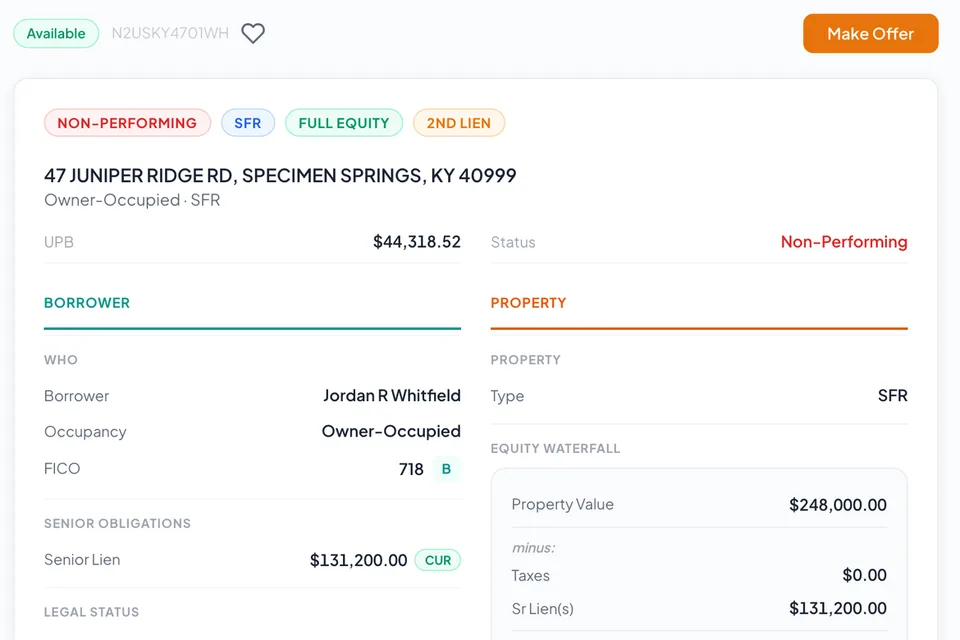
Investment to Value (ITV) is the ratio of a note investor's purchase price to the property value securing the loan. It is calculated as purchase price ÷ property value, expressed as a percentage. For a non-performing note bought for $40,000 secured by a property worth $100,000, the ITV is 40%.
ITV vs. LTV
ITV and Loan to Value (LTV) are often confused but measure different things. LTV is the borrower's perspective: the unpaid loan balance divided by the property value. ITV is the investor's perspective: the price the investor paid for the note divided by the property value. A loan with 90% LTV (borrower owes 90% of property value) can have a 40% ITV if the investor bought the note at a steep discount to par.
ITV is the more useful metric for pricing decisions on non-performing notes because it directly measures the equity cushion protecting the investor's basis.
Why ITV matters
When a note investor evaluates a non-performing loan, the ITV ratio is the headline pricing metric. A lower ITV means:
- More equity cushion if the property must be foreclosed and sold
- Greater absolute upside on a discounted payoff (DPO) workout
- Less downside if the property value declines during the workout period
Most institutional note investors target ITV bands by lien position and loan status — for example, 35–50% ITV on first-lien non-performing residential loans, lower on second liens.
ITV in pricing tools
The FIXnotes deal calculator and most NPL pricing models accept the bid amount and a BPO (broker price opinion) to compute ITV automatically. When a seller publishes inventory with stated UPB and BPO, sophisticated buyers translate that into ITV at their target bid before submitting an offer.
 Free Note Investor Workshop
Learn notes by pricing one.
Analyze a training loan modeled on a real deal, then submit practice offers on loans that actually sold.
- No credit card
- No email needed to start
- 7 steps · about 70 min