Note Investing Conferences: How to Get a Real ROI
How to choose a note investing conference, meet the sellers and brokers who matter, follow up within 24 hours and track the deal flow each event produces.
Why Do Conferences Still Matter in a Digital World?
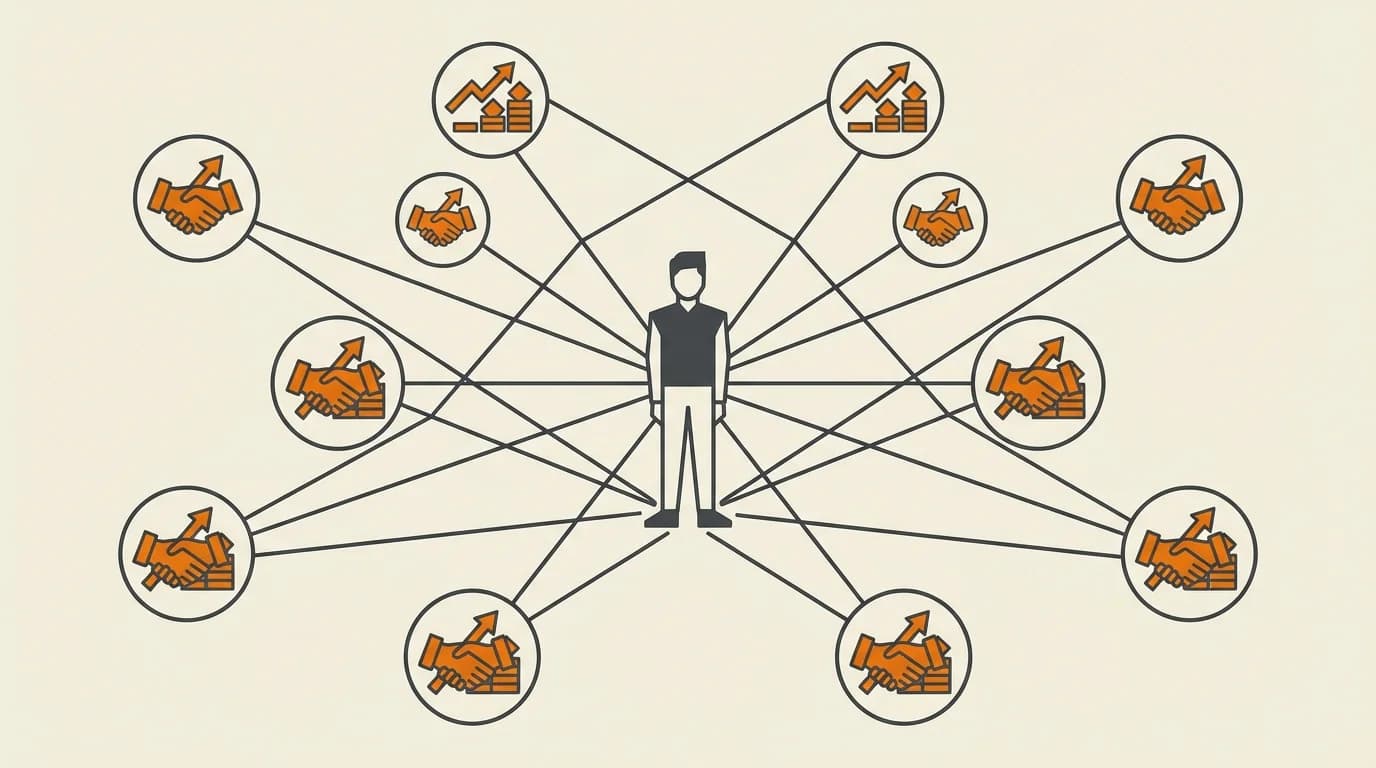
Cold emails get ignored. LinkedIn messages sit unread. Phone calls go to voicemail. But when you shake someone's hand at a conference, sit next to them during lunch, or stand beside them at a cocktail reception, something different happens. You become real. You become memorable. And in the secondary mortgage market, where relationships determine who gets access to product, being memorable is worth more than any marketing campaign.
Conferences compress months of relationship-building into a few concentrated days. A single event can introduce you to sellers you have been cold-emailing for a year, brokers who control access to off-market inventory, capital partners looking for operators, and service providers who can streamline your business. The problem is not that conferences lack value. The problem is that most attendees fail to extract that value because they show up without a plan, wander the event aimlessly, and never follow up.
This post breaks the conference experience into four phases -- preparation, execution, follow-up, and measurement -- and provides a system for each. The goal is to transform conference attendance from a vague networking exercise into a measurable pipeline activity that produces deal flow.
Pre-Conference Preparation That Pays for Itself
Preparation is where conference ROI is won or lost. The work you do in the weeks before the event determines whether you walk into the venue with purpose or drift from booth to booth hoping something useful happens.
Select the Right Event for Your Stage
Not every conference serves every investor. The note industry has events across a wide spectrum. Retail-oriented events cater to individual investors, brokers and small operators; the Diversified Mortgage Expo, for example, bills itself as an event for both new and advanced note investors and covers institutional loans alongside seller-financed paper. Institutional events, such as the Mortgage Bankers Association's Secondary & Capital Markets Conference and IMN's Bank Special Assets forums, draw capital markets desks, bank workout teams and fund buyers. The calendar changes, too: some long-running retail note events have gone on hiatus, so confirm an event is still scheduled before you plan around it.
Attending the wrong event for your current stage wastes time and money. If you are buying one or two assets at a time, an institutional conference built around bulk trades will not produce actionable connections. If you are ready to scale into institutional-level sourcing, a beginner-focused meetup will not introduce you to the decision-makers you need.
Before committing registration fees and travel costs, research who will be there. Organizers usually publish the speaker and sponsor lists in advance, and some share the attendee list with registrants. If the companies and contacts you want to meet are not on those lists, reconsider.
Build a Priority Target List
Once you have confirmed the right event, build a ranked list of the people you want to meet. Pull from the published speaker lineup, sponsor directory, and attendee list. Cross-reference those names against your existing CRM to see if you have any prior touchpoints. Research each target's company, role, and recent activity so you can walk into a conversation with context rather than a cold introduction.
Aim for five to ten priority contacts you are determined to connect with during the event. These are not casual introductions -- they are strategic meetings that you will actively pursue. Everyone else you meet is a bonus.
How Should You Package Your Professional Image?
Your physical presence at a conference tells people who you are before you say a word. Branded materials -- folders with your purchase criteria, completed transaction summaries, and even small giveaways -- signal that you operate as a professional, not a hobbyist.
Consider what materials communicate credibility for your specific goals:
- Buying notes: Bring a vetting package that demonstrates your entity structure, proof of funds or capital commitments, and a clear description of your purchase criteria. Bankers and institutional sellers evaluate counterparty risk before they share inventory. A polished vetting package reduces that perceived risk immediately
- Selling notes or raising capital: Prepare a one-page track record showing your investment history, resolution outcomes, and returns. Numbers talk. Vague claims about experience do not
- Building partnerships: Have case studies ready that illustrate how you have worked with similar partners in the past. Specificity builds trust faster than generalities
One detail that gets overlooked: a visible booth setup that works without you standing behind it. If you are exhibiting, design your display so that passersby can understand your value proposition, pick up a folder, and take action even when you are across the room having a conversation. An iPad with a sign-up form, rotating slides showing your recent transactions, and clearly labeled takeaway materials create a passive lead-generation system while you are actively networking elsewhere.
Who Should You Target at the Event?
Knowing who to meet matters as much as knowing how to meet them. Conference attendees fall into several categories, and your approach should shift depending on who you are talking to.
Decision-Makers vs. Gatekeepers
When you collect a business card, look at the title. Portfolio managers, special assets directors, and distressed asset managers are the people who control whether loans get sold. They are your primary targets. Principals and C-suite executives have authority but are often harder to access and may delegate sourcing relationships to their team. Account managers and junior staff can be valuable long-term connections, but they rarely have the power to put you on a distribution list or approve a sale.
The most productive conference conversations often happen with mid-level decision-makers -- the people who are senior enough to act but accessible enough to have a real conversation. Do not fixate exclusively on the biggest names in the room.
Mutual Connectors
The single most effective way to meet a high-value contact at a conference is through a warm introduction. Before the event, review your target list and identify anyone in your existing network who might know them. Reach out to those mutual connections in advance and ask if they would be willing to make an introduction at the event. A thirty-second introduction from a trusted colleague is worth more than a five-minute cold pitch.
During the event itself, pay attention to who is talking to whom. If you see a contact you already know engaged in conversation with someone on your target list, wait for a natural pause and ask for the introduction. This is not aggressive -- it is how professional networking works.
Content Creators and Speakers
Speakers and panelists are often the easiest high-value contacts to approach. They are literally on stage advertising their expertise and their company. After their session, approach with a specific comment or question about something they said. This immediately differentiates you from the crowd of people who approach speakers with generic compliments.
Even better: if you record a clip of their presentation on your phone, offer to send it to them afterward. You are providing genuine value -- a usable piece of content for their own marketing -- at zero cost to yourself. That gesture makes you memorable in a way that exchanging business cards alone never will.
Maximizing Every Hour at the Conference
Conference hours are finite and expensive. Between registration fees, flights, hotels, and meals, a two- or three-day event can easily cost several thousand dollars. Every hour you waste chatting with travel companions or sitting in sessions that do not apply to your business is a direct hit to your ROI.
Split Up From Your Team
If you attend with business partners or colleagues, separate during meals, breaks, and networking sessions. Sitting together at lunch feels comfortable and accomplishes nothing. Sitting at a table of strangers forces conversations that would not happen otherwise. Assign different team members to different sessions so you can cover more ground and compare notes at the end of the day.
Engage With Strangers Deliberately
Say hello to the person standing next to you in the coffee line. Sit at a table with open seats rather than hovering near the wall. If a conversation is not productive, excuse yourself politely and move on -- you are not being rude, you are being efficient. The people who extract the most value from conferences are the ones who treat every interaction as a potential connection, not just the scheduled meetings.
Take Actionable Notes on People
Session notes are useful. People notes are invaluable. When you collect a business card, immediately write on the back (or log in your phone) what you discussed, what they are looking for, and what you promised to follow up on. Photograph the card and enter the contact into your CRM before the day ends. Your memory will fail you by the time you get home. Your CRM will not.
Capture Content in Real Time
Conferences are content goldmines with a short shelf life. Photos of your booth, selfies with industry contacts, short video recaps of sessions you attended, and behind-the-scenes clips all serve dual purposes: they provide social proof that you are active in the space, and they give you a reason to tag and engage with contacts online after the event.
Record brief observations on your phone between sessions. What was the mood of the crowd during a particular panel? What surprising insight did a speaker share? What trend did multiple people mention independently? These raw notes become the raw material for social media posts, email newsletters, and even future blog content.
What Does an Effective Follow-Up System Look Like?
Follow-up is where most conference value is either captured or lost. Plenty of attendees never follow up on the contacts they make, or wait so long that the connection has gone cold.
The 24-Hour Rule
Contact your highest-priority connections within 24 hours of meeting them. On the flight home is ideal. Reference something specific from your conversation to jog their memory -- not a generic "great meeting you" message. Include a clear next step: a phone call, a Zoom meeting, getting added to their distribution list, or sending your vetting package.
The specificity matters. "I enjoyed our conversation about your second-lien portfolio in the Southeast -- I would like to schedule a call this week to discuss how we might work together" is actionable. "Great meeting you at the conference, let's stay in touch" is forgettable.
Tiered Follow-Up Based on Priority
Not every contact deserves the same follow-up intensity. Organize your conference contacts into three tiers:
Tier 1 -- Immediate pipeline opportunities. These are sellers with product, capital partners ready to deploy, or strategic contacts who expressed specific interest in working together. Follow up within 24 hours by phone and email. Schedule a concrete next meeting before the week ends.
Tier 2 -- Warm relationships to nurture. These are contacts who could become valuable over time but do not have an immediate need. Add them to your CRM, connect on LinkedIn, and include them in your regular outreach cadence. Check in quarterly with something of value -- a market insight, a deal tombstone, or an article relevant to their business.
Tier 3 -- General network expansion. People you met briefly, exchanged cards with, or had a pleasant but non-specific conversation with. Connect on social media, add to your email list (with permission), and keep them in your orbit. Some of these connections will become Tier 1 contacts months or years later when circumstances change.
Deliver on Every Promise
If you told someone at the conference that you would send them a document, an introduction, or a piece of information, do it. This sounds obvious, but the number of people who make casual promises at events and never follow through is staggering. Each broken promise erodes trust. Each delivered promise builds it. Over time, the investors who consistently follow through earn a reputation that precedes them at future events.
Converting Conference Contacts Into Deal Flow
Meeting people is the means. Deal flow is the end. The gap between the two is where most investors stall.
Conferences are one channel among several for where to buy mortgage notes, alongside marketplaces, brokers and direct seller relationships. To see what is trading now, browse the mortgage notes for sale on our marketplace.
Move From Social to Transactional
Conference conversations are inherently social. Converting those relationships into transactional ones requires a deliberate shift. After the initial follow-up, your subsequent communications should gradually introduce business substance. Share your purchase criteria. Ask about their current inventory. Propose a specific transaction structure. The transition does not need to be abrupt, but it does need to happen. Relationships that stay purely social never produce deals.
Demonstrate Credibility Through Action
Sellers and brokers at conferences meet dozens of aspiring buyers. Most of those buyers disappear after the event. The ones who stand out are the ones who demonstrate follow-through and competence in the weeks and months that follow. Closing a small deal quickly and cleanly with a new contact establishes more credibility than any pitch deck. If a seller offers you a small package as a test, execute flawlessly. Respond to emails within hours. Close on time. Handle post-sale issues without creating headaches for the seller. That first transaction -- even if the economics are modest -- is your audition for future, larger allocations.
Leverage Conference Content for Ongoing Engagement
The content you captured at the event becomes fuel for staying visible to your new contacts. Post a conference recap on LinkedIn and tag the people you met. Share a photo from the event with a brief insight about a session you attended together. Send a speaker the video clip you recorded of their presentation. Each touchpoint reinforces the in-person connection and keeps you in their awareness without being pushy.
How Should You Measure Conference ROI?
If you are not tracking results, you cannot improve. Conference attendance is an investment, and like any investment, it should be evaluated against measurable outcomes.
Define Your Metrics Before the Event
Set specific goals tied to your conference objectives. Common metrics include:
- New contacts added to CRM -- the raw count of meaningful connections made
- Follow-up meetings scheduled -- how many contacts converted from a card exchange to a scheduled conversation
- Pipeline opportunities generated -- deals, partnerships, or capital commitments that originated from the event
- Deals closed -- the ultimate measure, though this may take months to materialize
- Content pieces produced -- photos, videos, posts, and articles created from the event
Track the Full Funnel
A CRM system is non-negotiable for serious conference ROI tracking. Log every contact with a source tag indicating which event you met them at. Track each contact through your pipeline stages: initial meeting, follow-up completed, opportunity identified, deal in progress, deal closed. Over time, this data reveals which conferences produce the highest-quality contacts and the best conversion rates.
Some investors track a simple ratio: total revenue generated from conference contacts divided by total conference cost (registration, travel, lodging, meals, materials). A productive conference should deliver a multiple of its cost within 12 months. If it does not, either the event was wrong for your stage, your preparation was inadequate, or your follow-up system failed.
Compare Across Events and Years
When you have attended multiple conferences and tracked results consistently, patterns emerge. You might discover that smaller, niche events produce better ROI than large industry conferences because the attendees are more targeted. Or you might find that conferences where you exhibit generate far more contacts than events where you attend as a general participant. These insights allow you to allocate your conference budget strategically rather than guessing which events are worth attending.
Review your conference performance annually. Which events produced the most Tier 1 contacts? Which events led to closed deals within six months? Which events had the highest cost relative to outcomes? Cut the underperformers and double down on what works.
Common Mistakes That Derail Conference ROI
Avoiding common pitfalls is as important as executing best practices. The most frequent mistakes investors make at conferences share a common thread: they prioritize comfort over results.
Spending the event with familiar faces. Your existing network is valuable, but you can call them anytime. Conference hours should be spent building new connections.
Skipping preparation entirely. Walking into a conference without a target list, a set of goals, or polished materials means you are leaving outcomes to chance. Chance is not a strategy.
Collecting cards without context. A stack of 50 business cards with no notes about who each person is or what you discussed is functionally useless two weeks later. Capture context in the moment or it evaporates.
Delaying follow-up. Every day that passes after the event reduces the probability that a contact will remember you or respond to your outreach. The 24-hour rule exists for a reason.
Being inauthentic or overly aggressive. Experienced sellers and brokers can identify desperation immediately. If you come across as needy or fake, you will not earn a second conversation. Be direct about who you are, what you are building, and where you are in your journey. Honesty earns respect. Bluster does not.
Integrating Conferences Into Your Annual Strategy
Conferences are not isolated events. They are nodes in a year-round relationship-building system. The content you create at one event fuels your marketing until the next. The contacts you make in June become the deals you close in October. The reputation you build over multiple years of consistent attendance compounds into a brand that precedes you when you walk into the room.
Plan your conference calendar at the beginning of each year. Budget for registration, travel, materials, and the opportunity cost of being away from your desk. Assign specific goals to each event based on your business priorities for that quarter. And after each conference, conduct a structured debrief: What worked? What did you miss? What will you do differently next time?
The investors who treat conferences as a disciplined, trackable component of their sourcing strategy -- rather than an occasional excuse to travel -- are the ones who consistently turn handshakes into deal flow.
 Free Note Investor Workshop
Learn notes by pricing one.
Analyze a training loan modeled on a real deal, then submit practice offers on loans that actually sold.
- No credit card
- No email needed to start
- 7 steps · about 70 min