Deal Flow
Also known as: pipeline, deal pipeline, sourcing pipeline
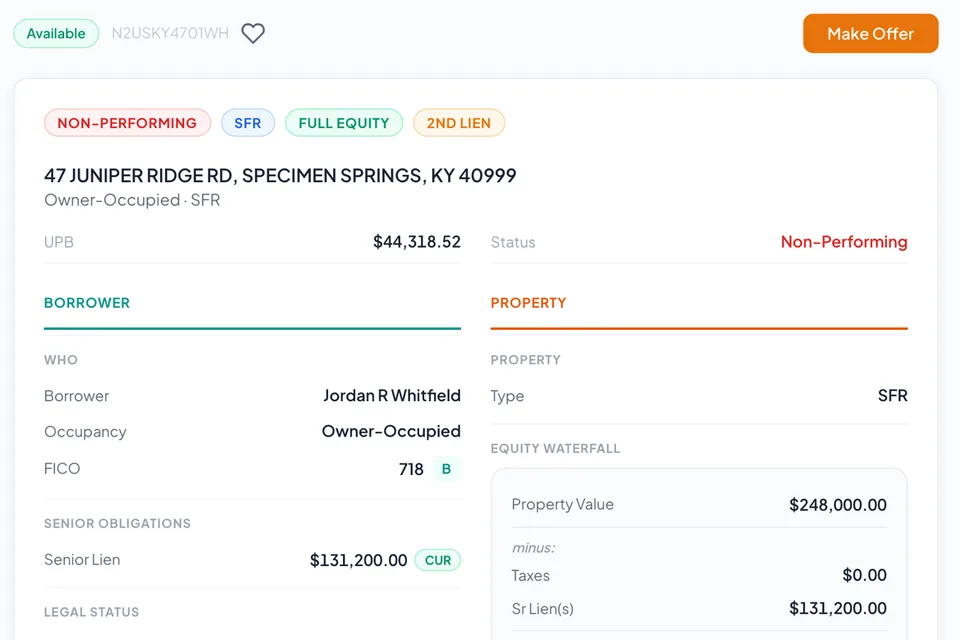
Deal flow is the volume and consistency of note acquisition opportunities reaching an investor's desk. In mortgage note investing, strong deal flow means you have a reliable stream of tapes to review, loans to underwrite, and bids to submit — giving you the ability to be selective and deploy capital on your terms rather than chasing whatever happens to be available.
Why Deal Flow Matters
Note investing is a sourcing-driven business. Unlike publicly traded securities, mortgage notes are not listed on an exchange. Every deal requires a relationship, a referral, or proactive outreach. Without consistent deal flow, investors face two problems:
- Capital sits idle. Uninvested capital earns no return. Gaps in deal flow mean your money is parked instead of working.
- You lose selectivity. When tapes are scarce, investors feel pressure to bid on marginal deals. Consistent deal flow lets you pass on loans that do not meet your criteria and wait for better opportunities.
Sources of Deal Flow
Deal flow comes from multiple channels, and experienced investors diversify their sourcing to avoid dependence on any single source.
| Source | Description | Typical Volume |
|---|---|---|
| Brokers | Intermediaries who aggregate tapes from sellers and distribute to their buyer network | High — brokers may send multiple tapes per week |
| Direct seller relationships | Banks, servicers, hedge funds, and other institutions selling directly | Moderate — requires relationship building |
| Industry conferences and networking | In-person events where sellers and buyers connect | Low volume but high-quality introductions |
| Online platforms and portals | Marketplaces listing notes for sale | Variable — ranges from individual loans to bulk pools |
| Other investors | Note investors selling from their own portfolios or passing on deals outside their criteria | Moderate — builds over time as your network grows |
Building Consistent Deal Flow
Building deal flow is not a one-time effort — it is an ongoing process of relationship development and reputation building. Several practices help:
- Respond to every tape. Even if you are not bidding, acknowledge receipt and provide feedback. Sellers and brokers remember buyers who are responsive and professional.
- Close when you commit. The fastest way to increase deal flow is to be known as a buyer who actually closes. Sellers prioritize reliable closers over higher bidders who retrade or fail to fund.
- Communicate your buy box. Tell your sources exactly what you are looking for — lien position, geography, loan size, payment status. Targeted deal flow is more valuable than volume.
- Attend industry events. Conferences and meetups are where new seller relationships start. A single connection can generate years of deal flow.
- Build a reputation. In a relationship-driven market, your reputation is your most valuable asset. Treat sellers, servicers, and borrowers fairly, and deal flow follows.
Deal Flow and the Investor Funnel
Deal flow is the top of the note investor funnel. A high volume of inbound tapes narrows through screening, due diligence, bidding, and closing to produce a smaller number of acquisitions. The wider your funnel at the top, the more selective you can be at each stage — and the higher the quality of the loans you ultimately purchase.
Tracking your deal flow metrics — tapes reviewed, bids submitted, bids accepted, loans closed — gives you visibility into your conversion rates and helps identify bottlenecks in your acquisition process.
 Free Note Investor Workshop
Learn notes by pricing one.
Analyze a training loan modeled on a real deal, then submit practice offers on loans that actually sold.
- No credit card
- No email needed to start
- 7 steps · about 70 min