 Note Investor Workshop
Lesson 1
Become the Bank
What if you didn't need to own property to build wealth in real estate?
Loading...
Note Investor WorkshopLesson 1
What if you didn't need to own property to build wealth in real estate?
Before the lesson
Here’s the whole business on one loan, the way it runs on FIXnotes. Click through the five steps.
 Simulated
Offering tape
Twenty-eight loans on the tape. Five filters leave one: a second lien on a family home in Kentucky.
In this workshop you do two of these yourself: analyze a real deal in Step 5, then make a practice offer on a real, recently sold loan in Step 6.
Simulated loan · illustrative only · not a promise of any return. The borrowers, the property and every figure are fictional.
Before I show you how note investing works, I need to tell you why it matters — and that starts with the worst morning of my real estate career.
My first tenant call was a woman — understandably upset — reporting raw sewage backing up through her kitchen sink. Day one of being a two-property landlord.
Most people hear “real estate investing” and picture the same thing. Buy a property. Find tenants. Collect rent. Deal with whatever breaks in between. I followed that script. My parents invested in rental properties. They were good at it. So when I started investing, I did what they did. My first rental generated about two hundred bucks a month above the mortgage. A lease-option deal added another three hundred. On paper — decent numbers.
The reality was a different story. Plumbing emergencies at midnight. Tenant complaints that couldn’t wait until Monday. Turnover cycles that ate months of profit. Then one weekend a sewage line backed up again — different property, a quadplex. Not a slow drain. A full backup. Standing there ankle-deep in what I hoped was just mud, doing emergency intervention on a Saturday morning, I realized something I’d been avoiding for months.
I didn’t have my father’s patience. Or his desire to manage physical properties for the rest of my life. There had to be a better path.
In February 2011, sitting in a college entrepreneurship class I’d signed up for on a whim, the founder of US Mortgage Resolution walked in and introduced twenty students to the secondary mortgage market.
You can buy people’s mortgages? Banks sell real estate debt for pennies on the dollar?
Banks sell because the borrower stopped paying and the bank would rather take capital back today than spend years and tens of thousands in legal fees trying to collect. Instead of becoming a landlord — competing with homeowners for properties, displacing families with tenants — you become the bank. You hold the paper, not the property. And the entire business can run from a laptop.
One non-performing note doesn’t have one outcome. It has three. Here’s an example.
A couple owes a $134,000 mortgage on a property worth $170,000. You buy that debt for $60,000 because they’re in default and the bank needs it off their books.
You reach out. Three questions: what happened, where are you now, what would you like to do. They want to settle. You offer $90,000 to clear the entire balance — less than 70% of what they owed. They take it. $30,000 profit on a $60,000 investment. 50% return. It can happen in less than 90 days.
They don’t have $90K in cash but they can afford a payment. You modify the loan. $650 a month at a reduced balance. Your $60,000 investment now generates monthly cash flow indefinitely — a 13% annual cash-on-cash return, with your full investment recovered in under eight years and payments continuing after that.
No realistic resolution through the borrower. You take the deed through a voluntary deed-in-lieu or foreclosure. Property worth $170K. Your $60,000 investment generates over $100K in profit.
Three paths. Three outcomes. All profitable. And the path that keeps the borrower in their home is the one you pursue first. Not just because it’s right. Because it’s usually the fastest, cheapest, and most profitable.
Which resolution path interests you most?
The math matters — but it’s not what kept me in this business for fifteen years.
When you buy debt at a discount, you can offer the borrower a deal the bank never could. A lower payoff. A modified payment they can actually afford. A fresh start. The bank already wrote off the loss and walked away. The borrower has been stuck — sometimes for years — with a lien on their property, no one returning their calls, no path forward.
“I wanted to thank you for being so helpful and most of all for being so responsive when just about everybody else was not responsive in any way. This closes this chapter in my life. I’m looking forward to moving on.”
Another deal — a senior lien on a property owned by an 89-year-old man with dementia. His daughter stepped in. The property was worth less than the balance owed. On paper, a dead end. But the family had emotional equity. We negotiated a modification the family could sustain. The investor earned a 229% annualized return. And an elderly man got to stay in the home he’d lived in for decades.
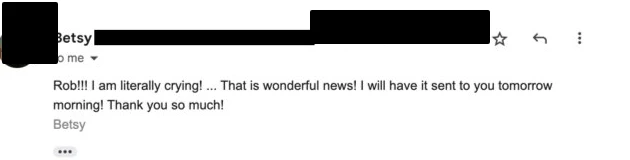
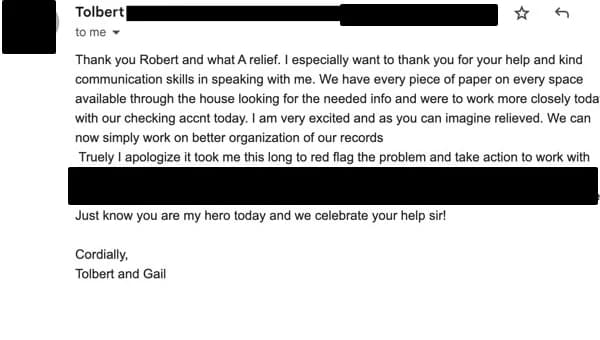
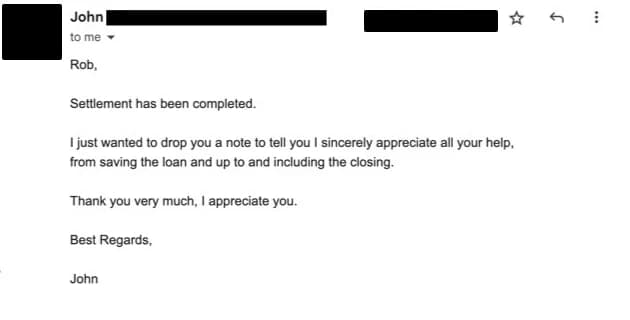
Most real estate investing takes properties away from homeowners. Note investing does the opposite. One loan at a time, you’re helping borrowers keep their homes — or get a clean resolution so they can move on.
If you need to feel good about how you make money — you’re in the right place. This is an industry where doing right by the borrower and making a strong return are not in conflict. They’re the same thing.
My first client spent $992,000 in trial and error building this business. I know the exact number because I tracked it. The two biggest categories — not properly analyzing loans, missing details that cost entire deals. And trusting the wrong people.
I always wished someone had handed me a roadmap. A structured path that said: here’s what to learn, here’s the order, here’s how to avoid the mistakes that cost almost a million dollars. That roadmap didn’t exist. So I built one. This workshop is the starting point.
So if the model works this well — why isn’t everyone doing it? Because there’s a gatekeeping problem. Banks won’t sell to you. Next, I’ll show you how we solved it — and hand you the tools to see for yourself.